School Timings: 9.00 AM - 2.00 PM

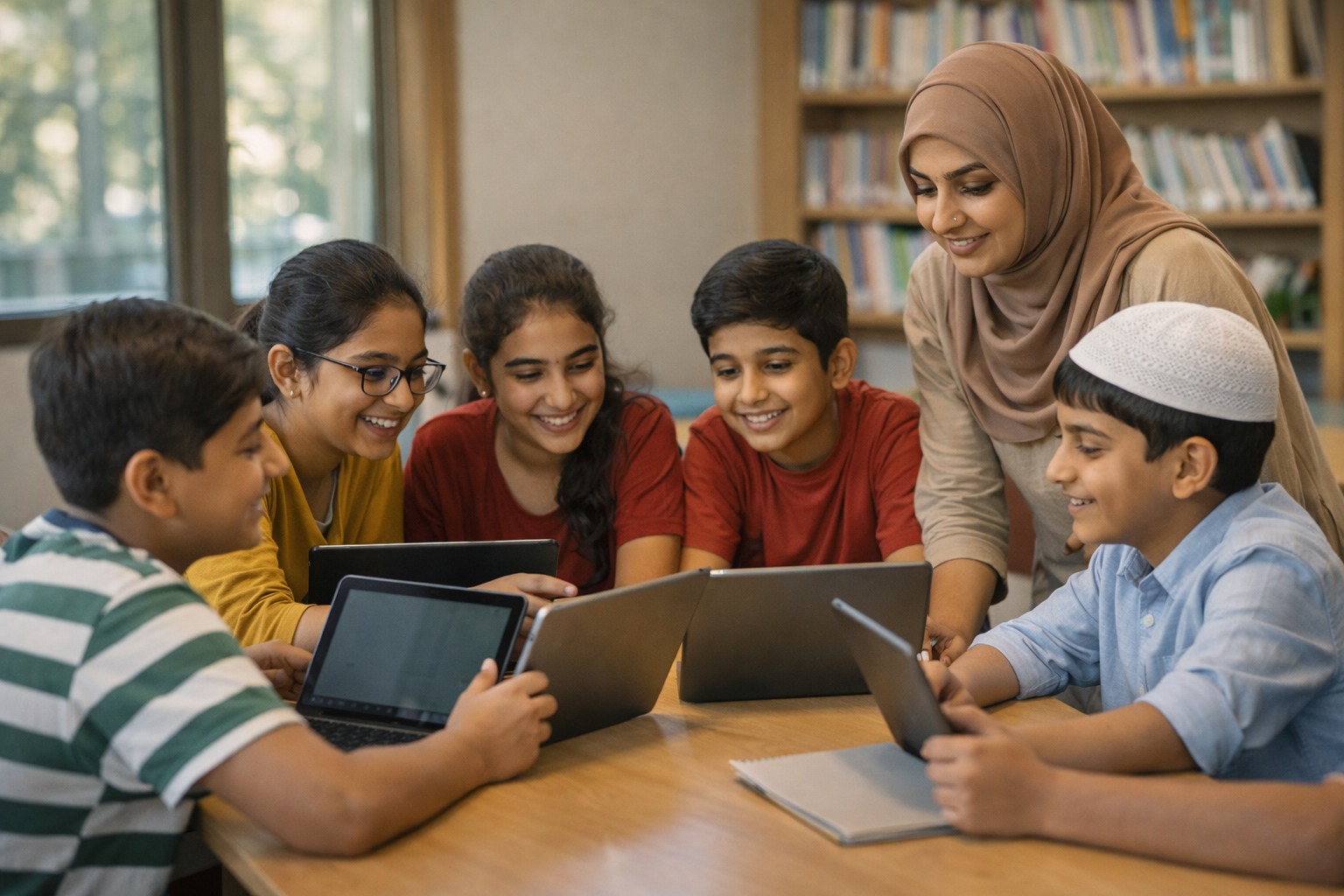

Education has always evolved with time. From traditional centres of learning and handwritten manuscripts to printed textbooks and today’s digital classrooms, every era has introduced new tools to support the way children learn. We now stand at a defining moment in educational history—where technology is no longer an optional addition but an essential pillar of effective teaching and meaningful learning.
Technology in education is not about replacing teachers or turning classrooms into screens. It is about enhancing understanding, expanding access, and preparing students for a rapidly changing world. When used thoughtfully, technology becomes a bridge between curiosity and knowledge, between potential and performance.
This blog explores why technology is so important in education, how it transforms learning experiences, supports teachers, empowers students, and prepares children for life beyond the classroom. Today, schools preparing students for the future understand that technology must be used as a tool, not a distraction.
The world our children are growing up in is very different from the one we knew. Careers that exist today did not exist a decade ago, and many traditional jobs are being reshaped by automation, artificial intelligence, and digital tools. In such a world, memorization alone is not enough. Students need skills like:
Critical thinking
Problem-solving
Digital literacy
Collaboration
Adaptability
Technology in education helps cultivate these skills naturally, as part of everyday learning.
Schools that embrace technology are not chasing trends—they are responding responsibly to the needs of the future.
One of the biggest challenges in education is keeping students genuinely interested. Every child learns differently—some through visuals, some through listening, some by doing. Traditional teaching methods often struggle to cater to this diversity.
Technology changes this.
With digital tools:
Lessons become interactive rather than one-way
Students participate instead of just listening
Learning feels exciting, not forced
Videos, animations, simulations, digital quizzes, and interactive presentations help students understand concepts instead of memorizing them.
For example, a science concept like the solar system becomes far more meaningful when students can see animated planetary motion rather than just reading about it. Mathematics becomes less intimidating when abstract formulas are supported by visual explanations and practice apps.
No two children learn at the same pace. Some grasp concepts quickly, while others need more time and reinforcement. In a traditional classroom, it can be difficult for teachers to tailor lessons to every student.
Technology helps bridge this gap.
Digital platforms allow:
Revision for students who need extra support
Advanced material for fast learners
Self-paced learning without pressure or comparison
A child who struggles with a topic can revisit lessons privately, without fear ofzif embarrassment. Another child who is curious to explore more can go deeper without waiting for the rest of the class.
This personalization builds confidence, independence, and ownership of learning.
There is a common misconception that technology replaces teachers. In reality, the opposite is true.
Technology empowers teachers by reducing routine work and enhancing teaching effectiveness.
Saves time on administrative tasks
Helps track student progress easily
Provides better assessment and feedback tools
Enables creative lesson planning
With digital attendance, automated assessments, and performance tracking, teachers spend less time on paperwork and more time mentoring students.Technology allows teachers to become facilitators, guides, and mentors—roles that are more meaningful than simply delivering lectures.

Modern education is not about knowing answers—it is about knowing how to find answers.
Technology-based learning encourages:
Research skills
Logical reasoning
Analytical thinking
Decision-making
When students use digital tools to explore real-world problems, they learn to think independently. Projects, online research, collaborative tasks, and simulations help students apply knowledge rather than just recall it.
This approach prepares students not only for exams but for real-life challenges.
One of the most powerful benefits of technology in education is its ability to connect classroom learning with real-world application.
Technology enables:
Virtual labs for science experiments
Coding platforms for logical thinking
Educational games for concept reinforcement
Digital storytelling for creativity and language development
Students don’t just read about concepts—they experience them.This practical exposure helps students understand why they are learning something, making education more meaningful and relevant.
Technology has played a crucial role in making education more inclusive and accessible.
With digital tools:
Learning is not limited to classroom walls
Students can access resources anytime, anywhere
Recorded lessons help during absences or revisions
Online resources support diverse learning needs
For students who require extra help, learning materials can be revisited multiple times. For curious minds, the internet opens doors to global knowledge.Technology ensures that learning never stops, even outside school hours.
Education works best when parents, teachers, and students are connected. Technology strengthens this partnership.
Digital platforms allow:
Regular updates on student progress
Easy communication with teachers
Timely notifications about school activities
Access to academic calendars and homework
Parents feel more involved in their child’s education, and students feel supported both at home and in school.
This transparency builds trust and creates a strong learning ecosystem.
Digital skills are no longer optional. Whether a student chooses science, commerce, arts, or vocational fields, technology will play a role in their future.
Technology in education helps students develop:
Computer literacy
Online research skills
Digital communication etiquette
Cyber awareness and responsibility
These skills are essential not just for careers, but for everyday life in a connected world.When students learn to use technology responsibly at a young age, they grow into confident, ethical digital citizens.
Creativity is one of the most valuable skills of the future. Technology provides endless opportunities for creative expression.
Students can:
Create presentations, videos, and digital art
Write blogs and stories
Design models and prototypes
Collaborate on creative projects
Instead of being passive consumers, students become creators of knowledge and ideas.This nurtures imagination, originality, and innovation—qualities that are essential for leadership and entrepreneurship.
Every child deserves quality education, regardless of learning differences.
Technology supports inclusive education by offering:
Audio and visual learning aids
Assistive tools for special learning needs
Flexible learning formats
Individualized learning support
Students with different abilities can learn with dignity and confidence, without feeling left behind.
Assessment is an important part of education, but traditional exams often fail to reflect true understanding.
Technology enables:
Continuous assessments
Instant feedback
Performance analytics
Skill-based evaluations
Teachers can identify strengths and areas of improvement early, allowing timely intervention and support.Students receive feedback that helps them grow rather than just grades that label them.
The future workplace values teamwork and collaboration. Technology prepares students for this reality.
Through digital platforms, students learn to:
Work in teams
Share ideas respectfully
Solve problems collectively
Communicate effectively
Collaborative learning builds social skills, empathy, and leadership qualities—skills that are just as important as academics.
While technology offers many benefits, it must be used responsibly. Schools play a crucial role in teaching students how to use technology wisely.
This includes:
Digital discipline
Ethical online behavior
Screen-time balance
Respect for privacy and information
When technology is guided by strong values, it becomes a powerful tool for positive growth.
It is important to understand that technology itself is neutral. Its impact depends on how it is used.
In a well-guided educational environment:
Technology supports learning objectives
Teachers control and structure usage
Students learn focus and responsibility
The goal is not to use more technology, but to use the right technology in the right way.
Schools today are not just centers of academic instruction—they are institutions that shape future citizens.
By integrating technology thoughtfully, schools:
Create future-ready learners
Encourage lifelong learning habits
Foster confidence and curiosity
Build strong academic and moral foundations
Technology, when aligned with strong educational values, becomes a catalyst for holistic development.
The future of education lies in balance:
Tradition with innovation
Discipline with creativity
Technology with human values
Schools that embrace this balance will prepare students not just to succeed academically, but to thrive as individuals.
Technology will continue to evolve, but the purpose of education will remain the same—to nurture minds, build character, and empower learners.
The importance of technology in education goes far beyond digital screens and smart devices. It is about creating meaningful learning experiences, supporting teachers, empowering students, and preparing children for the realities of the modern world.
When used thoughtfully, technology:
Makes learning engaging and inclusive
Encourages critical thinking and creativity
Builds confidence and independence
Prepares students for lifelong success
Education is not about keeping up with technology—it is about using technology to uplift education.
And when schools, teachers, parents, and students work together with the right mindset, technology becomes not just a tool—but a transformative force shaping a brighter future.
