School Timings: 9.00 AM - 2.00 PM

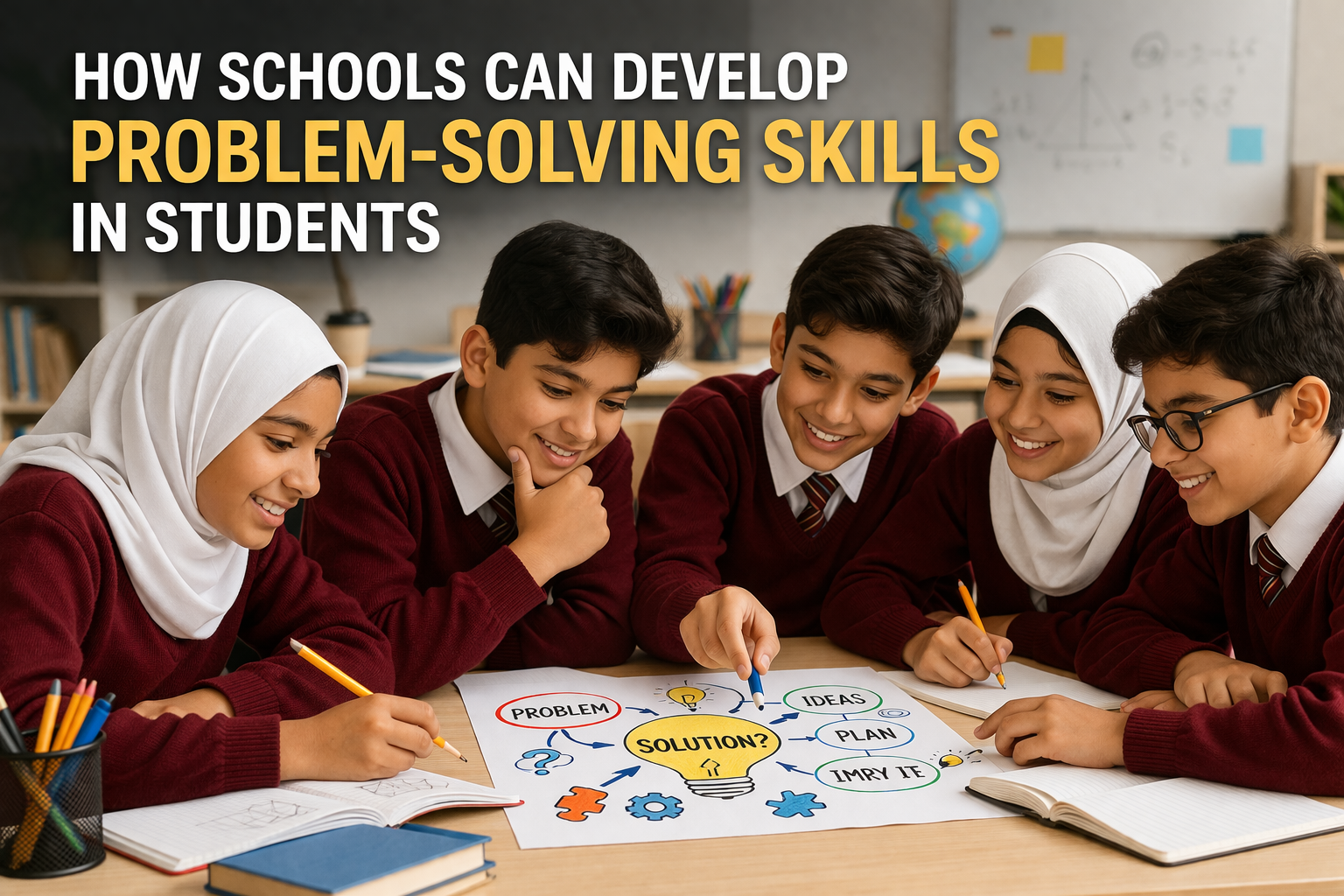
In today’s fast-changing world, academic knowledge alone is not enough for success. Students need to be equipped with essential life skills that help them face challenges, think critically, and make informed decisions. One of the most important among these is problem-solving skills.
Problem-solving skills for students are not just useful in classrooms—they are crucial in real-life situations, careers, and personal growth. Schools play a vital role in nurturing these skills from an early age, shaping students into confident and capable individuals.
Why Problem-Solving Skills Are Important for Students
Problem-solving is the ability to analyze situations, identify challenges, and find effective solutions. In education, it helps students go beyond memorization and truly understand concepts.
Developing problem-solving skills in students leads to:
Better academic performance
Improved decision-making ability
Increased confidence
Enhanced creativity and innovation
Stronger critical thinking skills
Students who develop these abilities early are better prepared to handle both academic and real-world challenges.
Schools are the primary environments where children learn how to think, question, and analyze. A strong educational system focuses not only on knowledge but also on how to apply that knowledge effectively.
Teachers and schools can shape problem-solving abilities by:
Encouraging curiosity and questioning
Promoting logical thinking
Providing real-life learning scenarios
Supporting independent thinking
When students are given opportunities to explore and experiment, they naturally develop problem-solving skills.
Students collaborating to solve a problem in a classroom environment
Modern education focuses on interactive and student-centered learning methods. These approaches help students actively participate in the learning process.
Activity-based learning encourages students to learn through hands-on experiences. Instead of simply listening to lectures, students perform activities, experiments, and projects.
This method helps students:
Understand concepts better
Apply knowledge in real situations
Develop analytical thinking
Project-based learning allows students to work on real-world problems over a period of time. This helps them explore solutions deeply.
For example, students can work on projects like:
Designing a simple model
Solving environmental issues
Creating presentations
Such activities enhance both creativity and problem-solving abilities.
In this approach, students are encouraged to ask questions and seek answers themselves.
Teachers guide students instead of giving direct answers, which promotes:
Curiosity
Independent thinking
Deeper understanding
Critical thinking is closely linked to problem-solving. It involves analyzing information, evaluating options, and making logical decisions.
Schools can promote critical thinking by:
Asking open-ended questions
Encouraging discussions and debates
Giving case studies and real-life examples
When students think critically, they learn how to approach problems from different perspectives.
Teacher encouraging critical thinking through classroom discussion
One of the most effective ways to develop problem-solving skills is through real-life learning experiences.
When students relate concepts to real-world situations, they understand their practical importance.
Examples include:
Solving everyday math problems
Participating in science experiments
Engaging in community-based activities
Real-life learning makes education meaningful and impactful.
Teachers play a key role in shaping students’ thinking abilities.
Effective teachers:
Encourage students to think independently
Allow mistakes as part of learning
Provide guidance instead of direct answers
Motivate students to explore multiple solutions
A supportive teacher helps students build confidence in solving problems.
Technology has transformed the way students learn today. Digital tools, educational apps, and online platforms offer interactive learning experiences.
Technology helps students:
Practice problem-solving through games and simulations
Learn coding and logical reasoning
Access global knowledge and resources
When used effectively, technology can significantly enhance analytical skills.
Group activities play a crucial role in developing problem-solving skills.
When students work in teams, they:
Share ideas
Learn from each other
Understand different perspectives
Develop communication skills
Teamwork encourages collaborative problem-solving, which is essential in real-world situations.
Parents also play an important role in developing problem-solving skills in children.
They can support their child by:
Encouraging independent thinking
Asking questions instead of giving answers
Providing puzzles and brain games
Allowing children to make decisions
A supportive home environment reinforces what children learn at school.
Parent helping child develop problem-solving skills through activities at home
While teaching problem-solving skills, schools should avoid:
Over-reliance on rote learning
Giving direct answers instead of guiding
Not encouraging questions
Limiting creativity
A flexible and open learning environment is essential for developing these skills.
Problem-solving skills have long-term benefits that extend beyond academics.
Students who develop these skills:
Become better decision-makers
Handle challenges confidently
Adapt to changing environments
Succeed in careers and life
These skills are essential for future success in any field.
Schools can integrate problem-solving into daily learning through:
Interactive classroom activities
Real-life case studies
STEM-based learning
Debates and discussions
Creative assignments
These methods ensure that students actively engage with learning rather than passively receiving information.
Problem-solving skills are the ability to analyze situations, identify issues, and find effective solutions.
They help students think critically, make decisions, and apply knowledge in real-life situations.
Teachers can use activity-based learning, ask open-ended questions, and encourage independent thinking.
Yes, children can develop these skills through activities, games, and guided learning from a young age.
Technology provides interactive tools, simulations, and learning platforms that enhance analytical thinking.
Problem-solving skills are essential for students to succeed in academics and life. Schools play a crucial role in nurturing these skills by adopting modern teaching methods, encouraging critical thinking, and providing real-life learning experiences.
By focusing on problem-solving, schools can prepare students to become confident, independent, and capable individuals ready to face future challenges.
Looking for a school that focuses on developing critical thinking, problem-solving abilities, and overall student growth? Explore how Hera Public School is shaping future-ready learners:


 S
S
