School Timings: 9.00 AM - 2.00 PM

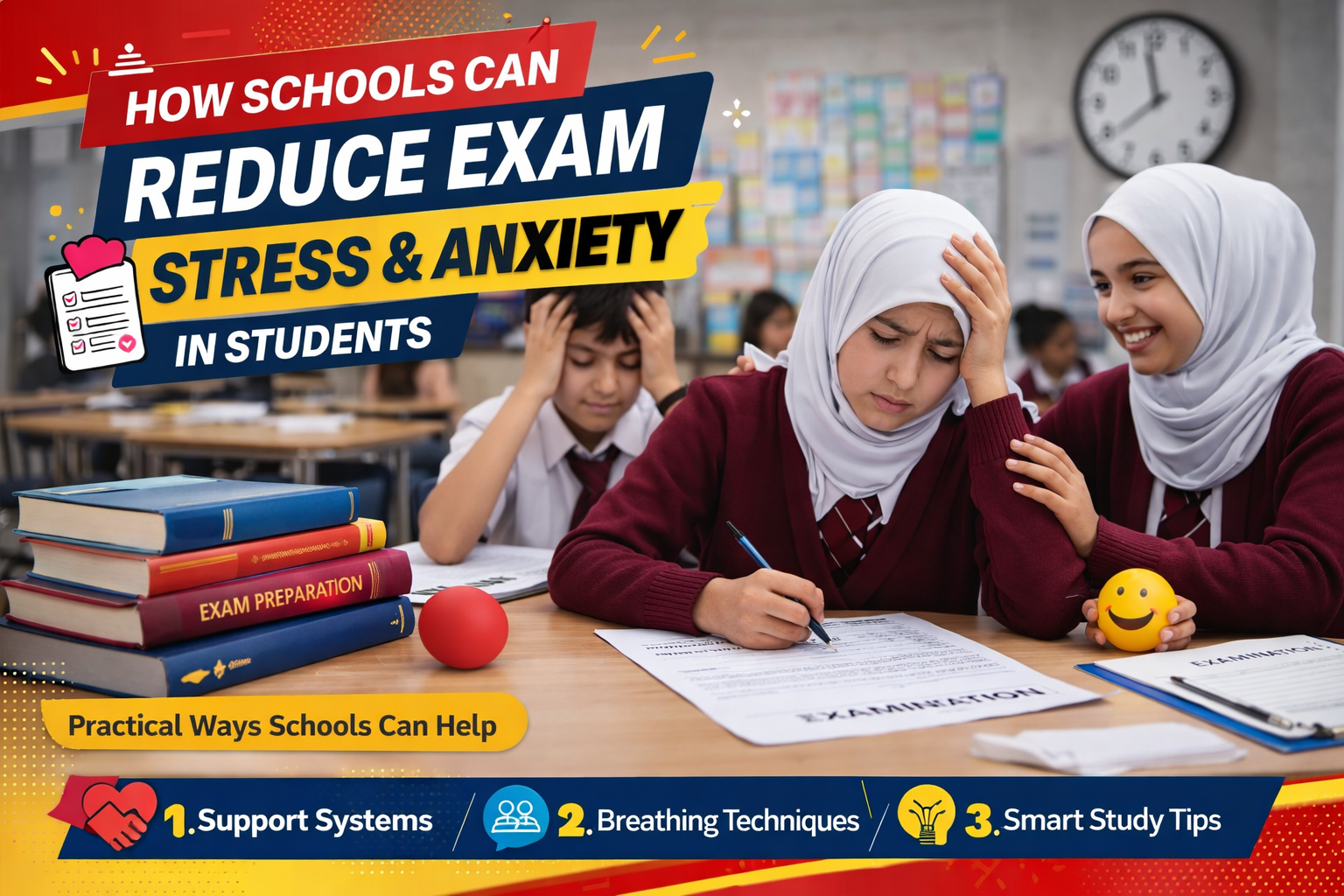
In the highly competitive academic environment, stress related to exams in students has become a common phenomenon in recent times. Although the main aim behind exams is to assess knowledge and understanding, in the process, stress in students also occurs, which can affect a student's mental and emotional well-being.
From sleepless nights to stress before exams, a student goes through a lot, and if not handled in the right manner, this can affect not only a student's performance but also his or her confidence and well-being as a whole.
This is where schools can help a student in managing stress in the best possible way. A school like Hera Public School can help a student in managing stress in the best possible way by providing a conducive environment for a student to learn without fear, thereby promoting performance and well-being as a whole. This blog will provide information on how schools can reduce exam stress
Exam stress is defined as pressure, anxiety, or nervousness felt before or during an examination. Although a degree of pressure is required for motivation, too much pressure can result in:
Lack of concentration
Fear of failure
Poor performance
Disturbed sleep
Lack of confidence
Understanding exam stress is the beginning of effectively managing it.
There are several reasons why students experience exam stress and anxiety:
Students may feel the pressure of disappointing their parents and teachers.
Students may face high expectations from their family and society, which may cause them mental stress.
Students may not have prepared well for their exams, which may cause them stress.
Students may feel a lack of confidence by constantly comparing themselves with their peers.
Students may have unhealthy study habits, which may cause them stress.
Therefore, by identifying the reasons for the stress and anxiety felt by students during their exams, effective solutions for the anxiety felt by students can be implemented.
Exam stress can have serious negative effects if not managed:
Academic performance may suffer
Loss of interest in academic work
Emotional imbalance
Physical symptoms may appear, e.g., headaches and tiredness
Loss of confidence
Therefore, it is necessary to tackle stress at an early stage and provide a conducive learning environment.
Schools have a significant role in determining the attitude of students towards exams. Here are some strategies that can be adopted by schools for the same:
A positive classroom environment reduces fear and builds confidence.
Teachers should:
Encourage open communication
Avoid overpressurizing the students
Promote a growth mindset
Students should be made to feel that learning is of greater importance than marks.
Instead of long, exhausting study hours, schools should teach:
Time management
Structured revision plans
Concept-based learning
These methods help reduce exam stress in students significantly.
Student managing studies effectively to reduce exam anxiety
Frequent assessments help students:
Students become familiar with the patterns of exams.
Students overcome their fear of exams.
Students become confident.
Exams are no longer a cause for worry for students; rather, they become a normal activity.
Activities that should be included are:
Meditation
Mindfulness
Sports
These activities help students calm their minds and focus their attention.
School counselors play an important role in addressing student anxiety.
They help students:
Overcome stress
Gain confidence
Coping with situations
One of the best solutions for student anxiety is professional guidance.
The main influencer of a student’s academic life is their teacher.
The ways by which a teacher reduces stress in students’ academic life:
Constructive feedback
No harsh criticism
Emphasis on effort rather than results
Building a good teacher-student relation
A good teacher can definitely impact a student’s confidence level.
Parents also play a vital role in reducing stress.
Focus on effort rather than marks.
Ensure proper sleep, nutrition, and study time.
Listen to children and reassure them.
Every child has a unique learning pace.
When parents and schools work together, students feel more secure and confident.
A daily routine helps students stay organized and avoid last-minute pressure.
Benefits of a routine:
Improved time management
Improved revision
Less anxiety
Improved concentration
Schools like Hera Public School emphasize discipline and routine, helping students develop habits that naturally reduce stress.
Parent helping child manage studies and reduce exam stress
Here are some simple tips students can follow:
Break study sessions into small parts
Take short breaks between study sessions
Practice deep breathing
Avoid last-minute cramming
Stay physically active
Maintain a positive mindset
Consistency is the key to reducing stress.
Schools must shift from a pressure-based system to a learning-based system.
This includes:
Encouraging understanding over memorization
Celebrating effort and improvement
Providing emotional support
A stress-free environment leads to better academic outcomes.
Exam stress is a common phenomenon faced by a majority of the student population, but this doesn’t mean that they cannot overcome it. With the right amount of help from schools, teachers, and parents, students can learn how to overcome exam stress effectively.
Schools, by promoting a healthy academic environment, can help transform exam stress for their students from a negative experience to a learning experience.
Schools like Hera Public School are dedicated to providing a platform for academic growth for their students.
FAQs
Exam stress is caused by fear of failure, high expectations, lack of preparation, and comparison with peers.
Schools can reduce stress by creating a supportive environment, promoting smart study techniques, and providing counseling support.
Effective solutions include proper time management, mindfulness, regular practice tests, and emotional support.
Parents can help by avoiding pressure, supporting routines, and encouraging children positively.
Yes, excessive stress can reduce concentration and negatively impact performance.


