School Timings: 9.00 AM - 2.00 PM

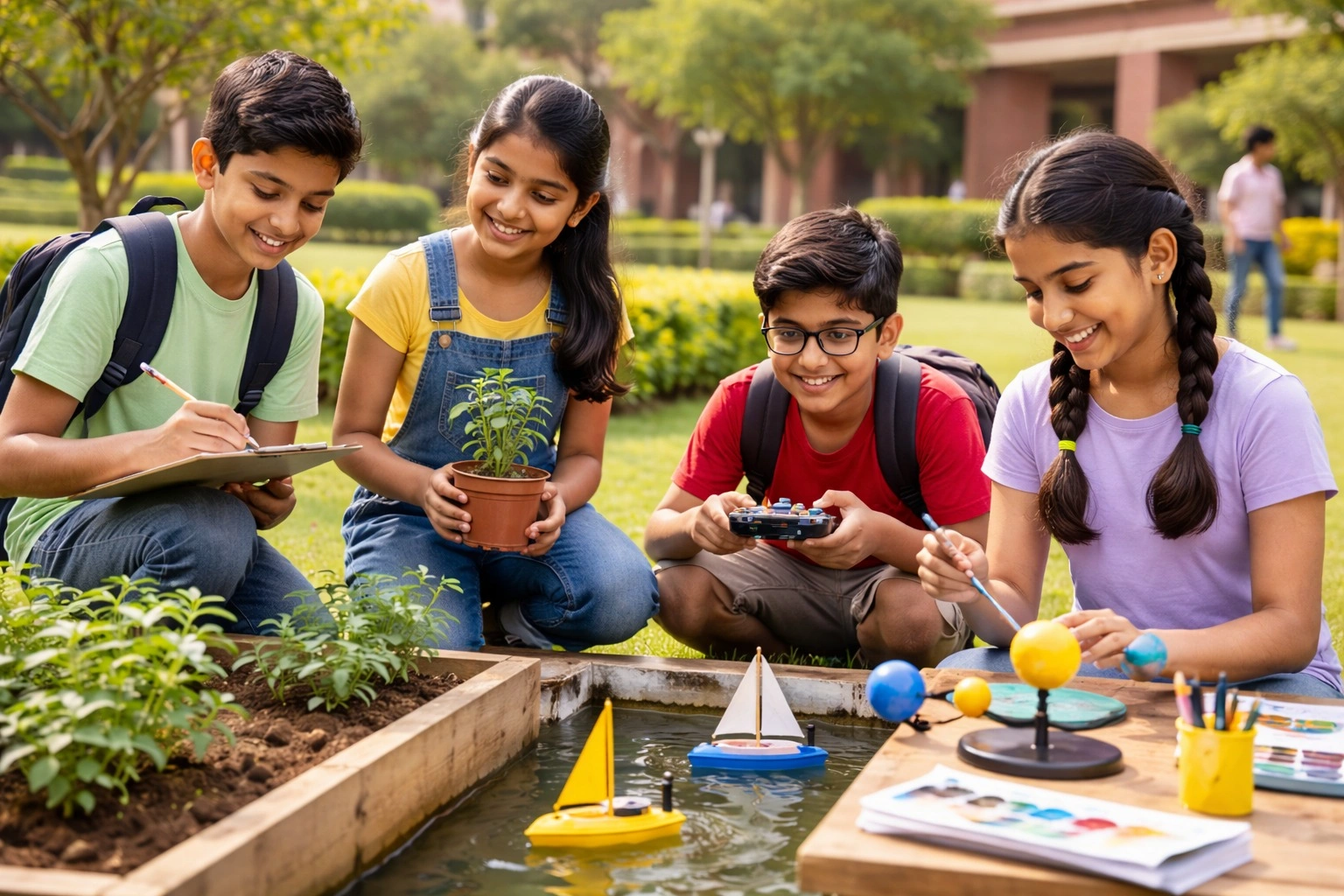

For a long time, the very character of education revolved
around textbooks, tests, and grades. Parents, teachers, and educational
institutions have in the past gauged success by means of marksheets and
academic standings. No doubt, academic knowledge holds its importance; however,
the environment that children are growing up in today is a lot different from
what their parents saw.
Being able to remember facts and score well in exams, by it
alone, will not suffice for survival in our modern world, which is more
complicated. Kids nowadays encounter hard, to, understand social situations,
emotional stresses, fast changes in technology, and a job market that will be
difficult to predict. In this situation, education based solely on textbooks is
a thing of the past. What kids really need is an education that equips them for
the actual world.
Going beyond the classroom books, education is about
inculcating life skills, values, emotional intelligence, critical thinking,
adaptability, and character. These are the traits that will not only help
children to get through their careers but also to be responsible, confident,
and ethical individuals.
This post will look into the reasons why education should extend beyond academics, what preparing for real life actually entails, and how schools and parents can together raise children who are ready for the future.
Understanding “Education Beyond Textbooks”
Education beyond textbooks refers to a holistic approach to
learning that balances academic knowledge with practical, emotional, social,
and moral development. It recognises that while textbooks provide information, life
requires application, judgment, empathy, and resilience.
This approach focuses on:
Such education equips students to face uncertainty with
confidence and make thoughtful decisions throughout their lives.
The Limitations of Textbook-Centric Education
Before understanding why education beyond textbooks is
indispensable, first of all, it is necessary to understand the limitations of a
pure academic model. Rote Learning Instead of Deep UnderstandingLots of
traditional systems and methods of learning place memorisation at the centre
and neglect understanding. When that is the case, students can get high grades
but still have difficulty when they try to use the knowledge practically.
Stress Due to Exams and AnxietyThe problem with focusing excessively on grades
is that it leads to pressure, fear of failure, and constant comparison which
can dwindle one's mental health. Lack of Life SkillsBesides that, textbooks do
not teach communication, teamwork, financial literacy, problem, solving, and
emotional regulation, etc. Narrow, Minded Approach Towards AchievementAcademic
results become the only benchmark of one's intelligence, thereby, disregarding
one's creativity, leadership, empathy, and resilience. Barely Any Readiness for
Adult LifeEven though students may come out of school academically rather well
equipped, on the other hand, they are emotionally unprepared for the different
aspects that bring family, relationships, and challenges.These spots in the
chain of a school, delivered education are the real reasons why it has to
broaden its scope, beyond textbooks.
What Does “Preparing Children for Real Life” Mean?
Preparing children for real life means equipping them with
the skills, mindset, and values they need to navigate life confidently and
responsibly.
Real-life preparation includes:
These abilities are rarely taught directly through textbooks but are essential for long-term success and happiness
Life Skills: The Foundation of Real-World Readiness
Life skills are the practical abilities that help
individuals manage everyday challenges effectively.
Key Life Skills Children Need
1. Communication Skills
The ability to express thoughts clearly, listen actively,
and engage respectfully is vital in personal and professional life.
2. Critical Thinking and Problem-Solving
Children must learn to analyse situations, ask questions,
and find solutions rather than relying solely on instructions.
3. Decision-Making
From choosing friends to managing time, decision-making
skills help children become independent and responsible.
4. Time Management
Balancing academics, activities, rest, and responsibilities
prepares children for adult life.
5. Financial Awareness
Basic understanding of money, savings, and value develops
responsibility and planning.
Life skills transform knowledge into action, making
education practical and relevant.
Emotional Intelligence: A Key to Lifelong Success
Emotional intelligence (EI) refers to the ability to
understand and manage one’s emotions while empathising with others.
Why Emotional Intelligence Matters
Children with strong emotional intelligence often perform
better in teamwork, leadership roles, and conflict resolution—skills essential
in real life.
Schools that prioritise emotional well-being create
emotionally secure learners who are better prepared for future challenges.
Values and Character Building: The Moral Compass of
Education
Education without values can produce skilled individuals
without ethics. Character building ensures that knowledge is used responsibly.
Core Values Schools Should Nurture
Character education shapes how children treat others,
respond to challenges, and contribute to society. It forms the moral foundation
that guides decisions throughout life.
Learning Through Experience: Beyond the Classroom
Experiential learning allows children to apply concepts in
real situations.
Examples of Experiential Learning
Such experiences help children:
Learning through experience makes education meaningful and
memorable.
Developing Adaptability in a Changing World
The future is uncertain. Many jobs of tomorrow do not exist
today. Preparing children for real life means preparing them to adapt.
Adaptable learners:
Schools that encourage curiosity, flexibility, and
innovation prepare students for an evolving world rather than a fixed career
path.
Social Skills and Collaboration
Success in real life depends heavily on how well individuals
work with others.
Education beyond textbooks promotes:
Children who learn to collaborate grow into professionals
who can work effectively in teams and contribute positively to organisations
and communities.
The Role of Discipline in Real-Life Preparation
Discipline is not about punishment; it is about self-control
and responsibility.
A disciplined child:
Discipline instilled during school years helps children stay
focused and resilient in adulthood.
The Teacher’s Role Beyond Teaching Subjects
Teachers play a critical role in preparing students for real
life.
Beyond academics, teachers act as:
A supportive teacher can influence a child’s mindset,
self-belief, and approach to challenges for years to come.
The Importance of a Safe and Supportive School
Environment
Children learn best in environments where they feel safe,
respected, and valued.
A positive school environment:
Such environments foster confident learners who are willing
to explore, question, and grow.
The Role of Parents in Real-Life Education
Education beyond textbooks is most effective when parents
and schools work together.
How Parents Can Support Real-Life Learning
When parents reinforce life skills at home, children develop
consistency and confidence.
Balancing Academics and Holistic Development
Education beyond textbooks does not mean ignoring academics.
Instead, it emphasises balance.
Strong academics provide knowledge.
Holistic education provides application, wisdom, and character.
When combined, children become:
This balance prepares them not only for exams but for life
itself.
Long-Term Benefits of Education Beyond Textbooks
Children educated beyond textbooks often:
These outcomes highlight why real-life education is an
investment in society’s future.
Conclusion: Redefining the Purpose of Education
Education must go beyond just equipping kids for exams, it
must also equip them for life. In a fast, evolving world, being successful
depends not only on the knowledge children have but also on the kind of people
they become.
Teaching outside the textbooks develops self, assured,
empathetic, flexible, and conscientious people. It empowers kids with the
instruments to deal with difficulties, choose morally correct paths, and be
socially beneficial.
We as parents and teachers should have one definite aim: to
bring up not only academically brilliant but also strong, sensible, and capable
human beings.
